
When a city invites its businesses to co-own the climate agenda, decarbonization stops being a target on a spreadsheet and becomes a community mission etched into daily choices and shared pride. Düsseldorf’s Climate Pact with Business shows how municipal leadership, chambers of commerce, and firms can form a living coalition for climate neutrality, a model that cities like Sekondi-Takoradi in Ghana are translating into their own context of coastal risk, youth dynamism, and energy transition imperatives. This is a story about neighbors, shopfloor engineers, market traders, teachers, and city officials discovering that climate action feels different—and works faster—when it is co-created and locally anchored.
Düsseldorf’s climate pact: a civic contract with business
In 2022, Düsseldorf convened a Climate Pact in which companies sign a climate protection agreement, exchange best practices, and receive city-backed guidance and networking to accelerate emissions cuts on the road to 2035 neutrality. Early signatories included Messe Düsseldorf and other firms meeting regularly at the TechHub to share methods on energy efficiency, procurement, and reporting, turning competition into collaboration for the common good. Corporate partners publicly commit to monitored progress, while the city and chambers coordinate knowledge, funding options, and peer learning so climate action scales beyond pilot projects.
What stands out is not just the policy signal but the social architecture: regular face-to-face exchanges, expert sessions, and a simple on-ramp for new firms to join a climate community rather than navigate alone. This “pact” transforms climate work from compliance to identity—Düsseldorf saying, in effect, “this is who we are together,” which is precisely the psychology cities need to close the implementation gap.
A mirror across the Gulf of Guinea: Sekondi-Takoradi steps forward
Sekondi-Takoradi has launched a Sustainable Energy Access and Climate Action Plan (SEACAP) that sets a long-term pathway to reduce emissions, expand clean energy access, and build resilience in every neighborhood by 2050. The plan emerged from local data, household consultations, and technical collaboration through the Covenant of Mayors in Sub‑Saharan Africa with EU and BMZ support, proving that global partnerships can catalyze genuinely local solutions. It maps emission sources—stationary, waste, and mobile—and proposes actions from afforestation and EV adoption to Bus Rapid Transit corridors and disaster risk planning, giving the metropolis a practical climate playbook.
Just as crucial, Sekondi-Takoradi’s Open Government commitment frames climate resilience as a co-created policy, intentionally bringing CSOs, private sector, traditional authorities, and citizens into decision-making so that action is both fair and durable. This is the civic heartbeat that makes climate plans stick: people recognize their voice in the blueprint, and that recognition becomes responsibility.
Translating Düsseldorf’s pact into Ghanaian municipal reality
- Partnership governance: Düsseldorf’s jointly run pact office and chamber leadership can inspire a Sekondi-Takoradi “Climate Partner Network” that convenes SMEs, port actors, and artisans for peer learning around energy, waste, and logistics decarbonization.
- Entry pathways: The simple “become a climate partner” mechanism can be localized with tiered commitments for microbusinesses through to large firms, ensuring inclusivity and momentum rather than gatekeeping.
- Knowledge loops: Quarterly best‑practice clinics modeled on Düsseldorf’s network meetings can focus on SEACAP priorities—solar for stationary emissions, organics and plastics diversion for waste, and route optimization for mobile sources.
- Measurement and pride: Publicly tracked pledges, like Düsseldorf’s monitored progress, build trust and a civic narrative—“our market, our port, our workshops are part of the solution”—which motivates the next circle of participants to join.
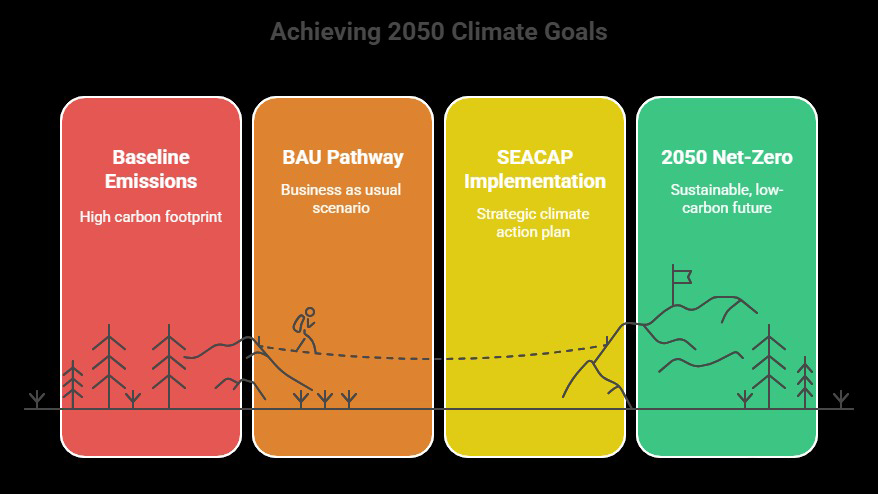
Community-driven climate action: where commitment turns into change
A young electrician in Takoradi learns to install efficient cold storage systems for fish vendors, lowering energy bills and curbing emissions, and goes home with both a certificate and a purpose that uplifts the street where he grew up. A women’s cooperative switches to solar-powered processing and composts organic waste, reducing methane while improving household incomes, and suddenly climate action feels like dignity, not sacrifice. In Düsseldorf, facilities managers swap notes on heat-recovery retrofits and fleet electrification at a Climate Pact meetup, and the next month a mid-sized supplier pilots the same upgrade with a mentor’s phone call away, compressing years of trial-and-error into one season of progress.
These vignettes show climate action as a relay, not a solo sprint: knowledge handed hand-to-hand until the community carries it further than any policy memo could. Sekondi-Takoradi’s OGP frame ensures those hands include citizens furthest behind, making resilience a right rather than a privilege, while Düsseldorf’s network proves that businesses become multipliers when they act together.
Five concrete moves for a Ghanaian Climate Partner Network
- Launch an open “Climate Partner” registry with easy sign-up and public recognition to normalize participation across firms and informal enterprises.
- Host quarterly decarbonization clinics tied to SEACAP pillars: stationary energy, waste, and mobility, with case demos and micro-grants for pilots.
- Create a peer mentor roster of early adopters (hotels, cold chain operators, workshops) to accompany newcomers through first audits and retrofits.
- Publish a lightweight climate scorecard for each partner to track savings and share stories that resonate locally and invite replication.
- Align with OGP processes to protect civic participation so decisions and benefits are visibly co-owned by residents, traders, and traditional authorities.
Why this model endures
Because it blends the three ingredients cities control: convening power, practical know‑how, and narrative ownership. Düsseldorf demonstrates how to orchestrate those pieces; Sekondi-Takoradi shows how to embed them in a coastal African city’s lived realities, from flood risk to informal sector ingenuity. When policy meets place—and businesses and citizens are the face of the plan—decarbonization ceases to be abstract; it becomes a neighbor’s new job, a drier market after the rains, and a port skyline that says tomorrow will be here for everyone.
Join the partnership
- Partners: Co-create the Ghana Climate Partner Network and share decarbonization know‑how across our port, logistics, hospitality, manufacturing, and creative sectors.
- Volunteers: Mentor a small business, help run a clinic, or contribute to the open scorecard effort so every win is measured and magnified.
- Donors: Seed micro-grants for first‑mover retrofits, community solar, and waste diversion pilots that can scale through municipal policy and peer networks.
Every hand matters, and this is how a city learns to breathe cleaner—together.